
Be intentional: 17 Tips to a purposeful living
Get ready to be intentional and live your life to the fullest.
If that statement resonated with you. I’m glad. Read on and I will show you how.
Specifically, you’ll learn more about being intentional and you’ll also find out what intentional living really means. You’ll walk away with 17 tips on how to live a life on purpose.
But before we dive in, if you’re ready to start being intentional with your week. Using a 2-page Weekly Planner like this will be a good starting point. And it’s free.

DISCLOSURE: As an Amazon Associate, I earn from qualifying purchases. This post contains affiliate links which means I receive a commission at no additional cost to you if you click through and make a purchase using those links. See my full Disclaimer here.
This is important
We are running for a limited time.
Wouldn’t you agree?
In the grand scheme of things, a human life is extremely short. One can go in a split of a second, without warning.
Sadly, a lot of people live on autopilot. They let their daily lives pass by without deliberate action. No intentional planning to live their life to the fullest.
They continue until they are faced with a sudden awareness of lost opportunities and missed chances. That includes unmet goals.
I used to be one of these people. Not anymore.
My life isn’t perfect right now but it’s certainly so much better than before I got into intentional living. And that’s why I’m sharing these tips.
It’s never too late to start a meaningful life.
What does it mean to act with intentionality?
One of the reasons of unmet goals is chronic procrastination and living without intent.
Living without intent means doing something without specific reason or purpose. There’s no conscious awareness of the action and mindfulness in the process.
Let me show you what it looks like.
You and I as humans have goals. We have ambitions and aspirations.
So we set goals and we plan.
I can’t speak for you but I’m sure you can somehow relate. Oftentimes, we set goals and we plan but then we stop taking actions to meet those goals.
It’s pretty common. We set goals and we plan. But somehow somewhere we stop executing the plan. So we don’t achieve those goals.
One of the reasons is because the desire to reach those goals are watered down by inevitable routine of daily life. We get distracted by other things. And we temporarily stop taking action so we don’t achieve those goals.
Let me share an example from a personal experience.
In 2016, I had a goal of getting my driver’s licence.
It’s now 2022 and I’m still on my learner’s licence.
I can drive the car but legally I can’t drive without my husband with me because I only have the Learner’s Permit. Because I procrastinated for a long time. I let my days passed by without the intent of making that driving goal a reality for me. Maybe I just wanted it at the time but there was no strong reason behind why I wanted that goal.
In hindsight, only if I have been focused on that goal, I would have made time to practise driving daily.
And because now I have other priorities I just had to let go of that goal. Even though I’m ok with it, still, it was a missed opportunity.
How do you live an intentional life?
You live an intentional life by examining your “why’s” and creating a lifestyle based on your values and beliefs.
It’s all about aligning your beliefs, thoughts, feelings and behaviour according to what you value.
It starts with a desire to live life to the fullest.
And even though you might not know a lot about intentional living (yet), just the desire of living with intentionality is more than enough to start with.
You can begin with these 17 Tips to a purposeful living.
Related Post: A Complete Guide on how to be Intentional and Make Time for what Matters.
Be intentional with these 17 purposeful living tips
Now that we have covered what it means to act with intentionality and what it looks like to live on purpose, it’s time to dive into tangible ways of living a purposeful life.
This will help you live with more intent and achieve your goals with ease.
1. Practise money mindfulness
Finance is an important area of a purposeful living.
We all need money to live. So making an effort to exercise intention with money is critically important.
If for whatever reason you haven’t been paying attention to your personal finances, I encourage you to consider thinking about it now.
The purpose of living an intentional life is living life with ideally less stress while working on your goals (and purpose).
Unnecessary financial stress can be avoided by simply paying attention to your money.
You can start today in two ways. One, use the free money trackers below if you’re just starting to practise money mindfulness. Two, read the related blog posts below. Or you can do both.

Related Blog Posts:
6 Steps to Develop a Positive Money Mindset
An example of a Personal Financial Plan
2. Find your purpose
As humans we are hard-wired to find purpose in what we do. We look for fulfilment in our lives. But without purpose or intent, life fulfilment can be challenging.
One way of meeting that sense of fulfilment is achieving our life goals.
To help you define and achieve your life goals, start with finding your purpose.
Consider examining (without judgement) if what you’re doing now is aligned with your purpose.
Having a sense of purpose in your work makes it so much easier to carry out your job with a greater intent.
If you’re unsure what your purpose is at the moment, it’s ok.
For now, you can try doing something that makes a difference in other people’s lives or the world. I know this sounds too big, so you can start with making a difference in your community perhaps.
Try doing random acts of kindness or volunteer towards a worthy cause.
If your circumstance allows, going for a career that helps others can also allow you to experience intentional living in a remarkable way.
3. Set intentional Goals
After knowing your purpose, setting intentional goals will be the next thing you can do to live an intentional life.
An intentional life is a lifestyle on purpose. To fulfil that purpose it’s important to set intentional goals.
After setting intentional goals, you can then mindfully align your beliefs, your thoughts, feelings and actions to make those goals your reality.
In other words, if you want to live with intent, you need to set goals and aspirations that are aligned with what’s important to you.
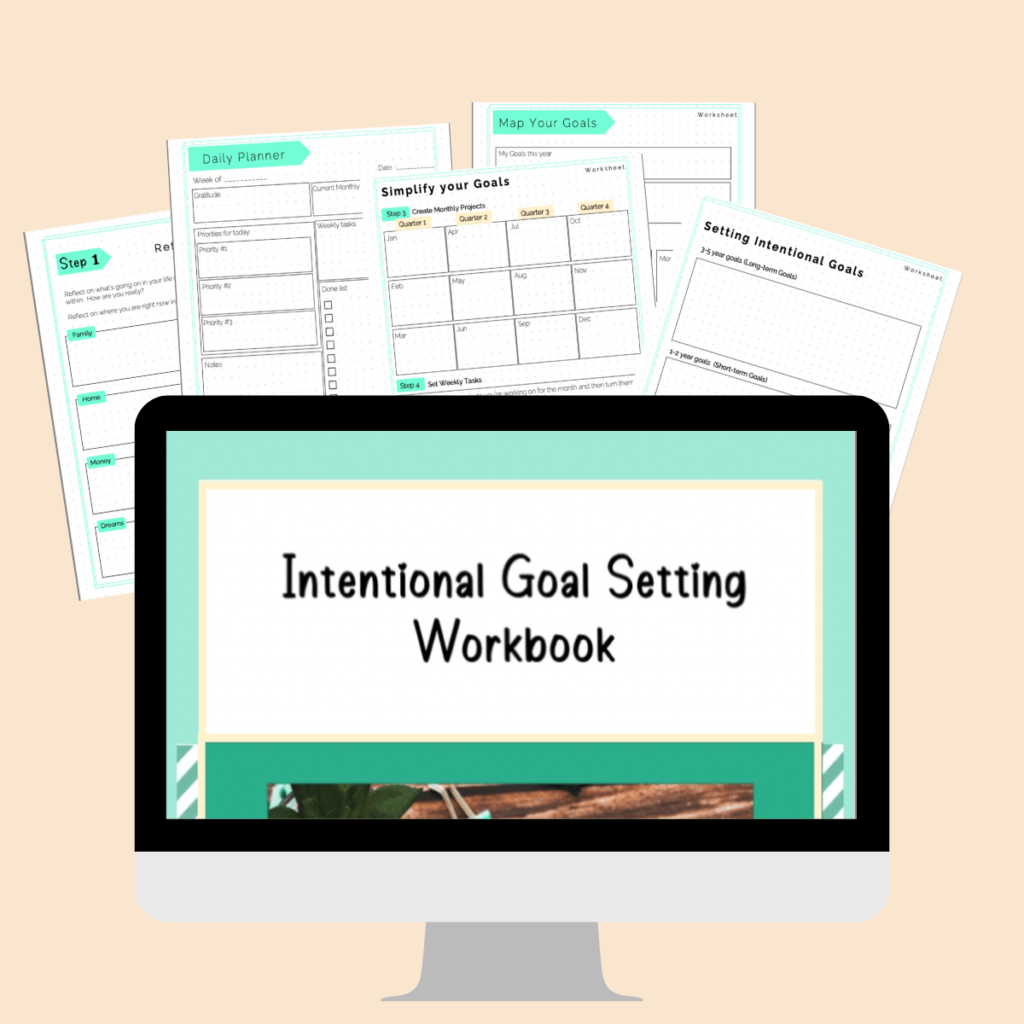
If you’re ready, I created an intentional Goal Setting Workbook that will help your set meaningful goals and create a successful year. And you can start this any time of the year.
If you buy it through this link, you’ll have it instantly for $8 instead of $18. (discount automatically applied at the check out) Get your copy through this link or click the image below.
4. Define your Values
Your values are yours. These are thoughts and beliefs behind what’s important to you.
In a deeper sense, values guide you with your actions. It’s what sets the bar that helps you know if what you’re doing matters.
The truth is we can do anything we want. We can spend our time however we like. The big question is, are we doing things that matter?
I can’t answer that for you but you’ll know the answer.
You’ll know it matters if it’s aligned with your values.
So, to live a purposeful life, it’s important to identify your values. This is going to help you stay on the right track to achieving your goals.
You won’t always do the right thing (just like me and everyone else), but you’ll know when it happens.
And because you know what you value, you can always nudge yourself gently back to your desired path.
5. Plan and execute
Having a plan and then committing to execute that plan is essential to a purposeful living.
To make it easier for you to implement the tips in this blog post, let’s just focus on a smaller kind of planning. You can level-up your planning strategy later on.
So let’s talk about planning your day.
Going about the day without purpose is all but impossible if when you wake up, you don’t have any sense of what the day entails.
You can’t achieve your goals if you’re going to react on the fly on one thing after another.
So my best tip is to plan your day the night before.
You can plan it the way you like. It can be detailed or as simple as dot points of your next day.
The key is to have an idea of what to prioritise the next day. You can use a Bullet Journal, a simple To-do List Printable, or you can just use your phone notes app.
Here is a daily planner that will help you plan your day and execute your plan. Click the image below or grab it from this link.

Related Post:
3 Intentional Steps to plan your year
Easy Daily Routine Guide to take care of everything
6. Mind your mindset
Attitude is indeed everything.
Think about this for a second.
If you detach yourself from a situation whether it’s good or bad. That situation is neutral.
Let me elaborate by using an example.
Let’s say you went for a job interview. But you didn’t get a job. Not getting the job is a neutral circumstance. So at this point it’s neither positive or negative situation.
It will only be positive or negative if you want it to be.
Your thoughts could be either “I didn’t pass the interview, I didn’t get the job. So I failed!”.
Or, you could also have a thought like this: ” I didn’t make it. Oh well, that was a learning experience. I will try again and try to do better next time”.
Did you notice the difference between those thoughts?
One can create a negative emotion and the other can create a positive emotion.
So in that example, not passing the interview could either be good or bad situation depending on your perspective. You choose.
And that perspective has a lot to do with your mindset.
Having a positive mindset is powerful because living on purpose is not an easy path. It requires certain level of intention.
And yes including how to choose the thought you want to have especially in a challenging situation. It’s not easy but doable.
Purposeful living requires changes in your ways, including breaking routines. There will always be a necessary amount of discomfort as you try and live life with intention.
So having a healthy mindset will help you go through all that.

7. Value your time
Value yours and other people’s time. Time is a precious and finite resource. Make sure that you remain picky with how you spend yours.
This is important because it helps you focus on what matters.
You can do this by:
- Listening more
- Setting healthy time boundaries and,
- Avoiding time-consuming and empty activities.
Listen more.
Effective communication is a 2-way street. But honestly, it takes a certain degree of intentional action to give someone the centre stage when it’s their turn to speak.
So make a mindful effort to listen more and listen intently. This is important because it helps to avoid breakdown in communication and misunderstandings. Therefore saving you unnecessary stress.
Set healthy time boundaries.
This is so simple yet hard to put into practice. But it can be done.
Work when it’s work time and rest when it’s rest time.
Avoiding time-consuming and empty activities.
I’m not against screen time. Screen time is helpful as long as it’s done with intention.
While it seems like free time is scarce luxury within a typical day, there’s actually more of it hidden throughout the day.
The issue is, it often goes unnoticed because of activities that we do without intentionality.
Scrolling on the phone, watching too much television and engaging in meaningless conversations.
There’s absolutely nothing wrong with using a phone, watching tv and having conversations. But doing them without purpose is what makes it unhelpful.
So set time-limits. And you’d be surprised at how much more meaningful activities you can do when you start setting healthy boundaries.
Set healthy boundaries to protect your time and energy.
8. Make time for self-care
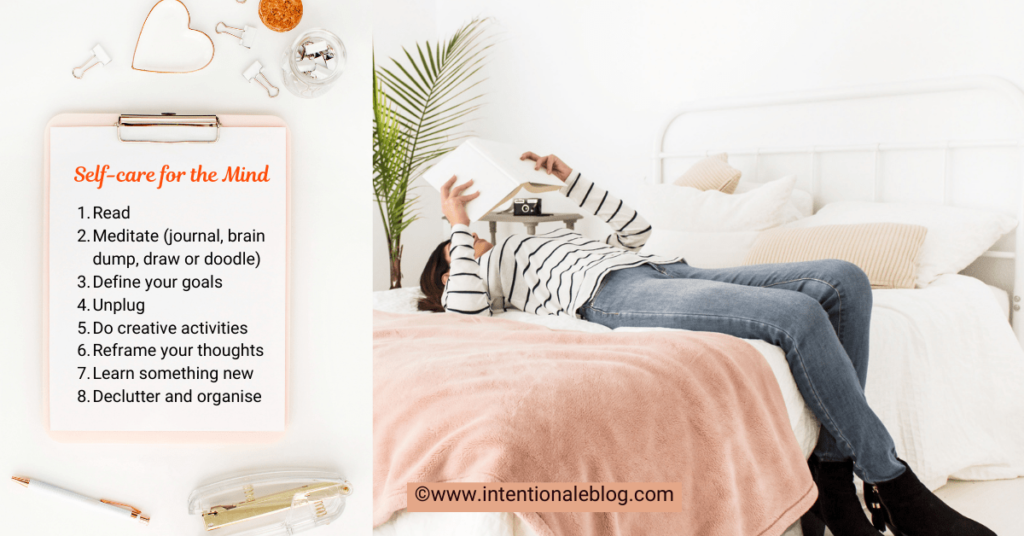
Since we have touched on time.
We might as well highlight the importance of making time for yourself.
I personally struggled for a long time making time for activities that take care of my body, mind and spirit. It’s something I’m still working on up to this day.
And if you’re like me. I sincerely encourage you to make that a priority right this moment.
Start with a small step you can do and build on that. You just need to start now.
It can be easy to give so much of yourself for all the things you do for your day job, families and other commitments. But please understand that you cannot give what you don’t have.
Consider dedicating some well-earned time to do things for you and enjoy every minute of it.
Do things that fill your cup. Look after your physical and mental well-being. It will give you more energy and bring out the best version of yourself.
Do more of what makes you happy. Spend more time doing what lights you up.
9. Be present
When you’re driven and highly motivated to achieve your goals, it’s easy to get caught in the “busyness” of it all.
Between trying to grow and making progress, sometimes maintaining a relationship is pushed in the back. Unfortunately this is not ideal.
Just like every other worthwhile thing, relationships with your family and friends also require time and effort.
All the accolades and success in the world will be meaningless if you don’t have anyone around to celebrate it with.
So make a conscious effort to be present. Whether it’s a solid 10 minutes or a few hours. Just be present.
Another aspect of being present is spending time doing activities that encourage mindfulness.
This is being present with yourself.
Some examples of these activities are: mindful meditation, colouring for mindfulness, and journaling.
I have been resourceful and creative with implementing this tip myself because I can’t be still (unless I’m sleeping).
So I listen to music, I write , I doodle and I do a 2-minute silence in the morning before I get up.
You can also try going outside for a walk or quiet sitting. These are simple activities but it can aid in your ability to be intentional. It’s also a good way of experiencing quiet time away from the chatter and artificial noises of the indoors.
The key is, when you’re doing something important, be engaged in that present moment.
10. Slow down
In this fast and ever changing world, this tip may sound silly. Because everyone wants to get more done in a fast manner. But what I’ve learned since embracing intentional living is, slow can be better.
Slowing down on purpose helps improve the sense of intention.
It’s a way to live in the moment. A strategy to understand and appreciate the process of what we’re doing by being focused and detailed.
Be comfortable in having down time. Not because you’re ill or tired. But just be ok with slowing down. Unwind and relax. And when you do, try not to worry that something is not being done.
Being intentional is not just about being present and focused when involved with work activities. It also means that you fully give yourself time to rest.
One way to practise slowing down is to give yourself more time each morning. Beginning each day with an intentional mindset makes it easier to do so for the rest of the day moving forward. It sets you up for a successful day too because you start by being in control of your time.
If you find yourself jumping out of bed in the morning with a few minutes to do all the things before it’s go time, it’s more likely that the things you do will be done without intent.
So giving yourself even just an extra 15-30 minutes can be a game changer.
You’ll start your day slower, mindful and more focused.
11. Be a mindful consumer

Whether you’re living an intentional life or not, you’re a type of consumer in a sense. Just like me and the next person.
We consume food, knowledge and resources. And whilst it’s generally good to keep the mindset of abundance, it’s important to consume with intent.
Make a list of what’s important and essentials and only focus on those when things starts to feel too much. You have to draw the line to remind you of how much is enough.
So how do you consume with intention?
With food, you could try mindful eating. It’s eating at a much slower pace and taking your time to eat and enjoy your food.
But what about knowledge and information?
Knowledge and information are all around us. From every form of media and group conversations. While they are helpful some of them are negative. To be intentional in this area, what you can do is limit or avoid your exposure to them. Doing so will help you lessen the need for you to process negative thoughts.
As for resources, I’m talking about resources for self-education. We all consume something to learn more and improve a skill perhaps.
To be a mindful consumer in this area, consider only taking what you need at the level you are at right now. You’ll have plenty of options and chances to get what you’ll need later on.
Having that mindset will help you avoid information overload.
12. Write things down
Put Your Thoughts On Paper.
Writing goals down on paper increases the chances of them coming into fruition. Transferring the thoughts, ideas and even worries can free up some precious mental space.
Achieving goals and having more mental storage are not the only benefits of writing things down. It helps you with focus, efficiency, and effectivity. It also makes things easier for you because when you write things down, you don’t have to remember everything.
I love thinking on paper. This is heavily influenced by The Bullet Journal Method and Getting Things Done Method
Outlining plans, thoughts, processes for both daily pursuits and long-term aspirations allows me to reflect back on them when needed.
This promotes more intention and it provides much needed space for much deeper and intentional thinking.
If you find yourself overwhelmed with swirling thoughts and ideas, you can start to to brain dump. I promise you’ll feel much better after a session.
Related Post:
How to be Intentional using the Bullet Journal Method.
13. Just let go
If something is not serving you right now let it go.
Whether it’s people, things and thought. Let go of them if they are not serving you anymore.
Let go of the mental clutter. Do a Brain Dump.
Say goodbye to excess material possessions. Declutter every now and then.
If it’s hard to let go of a person or people, you can at least make a space between you and them.
Related Blog Post:
3 Biggest Reasons to do a Brain Dump

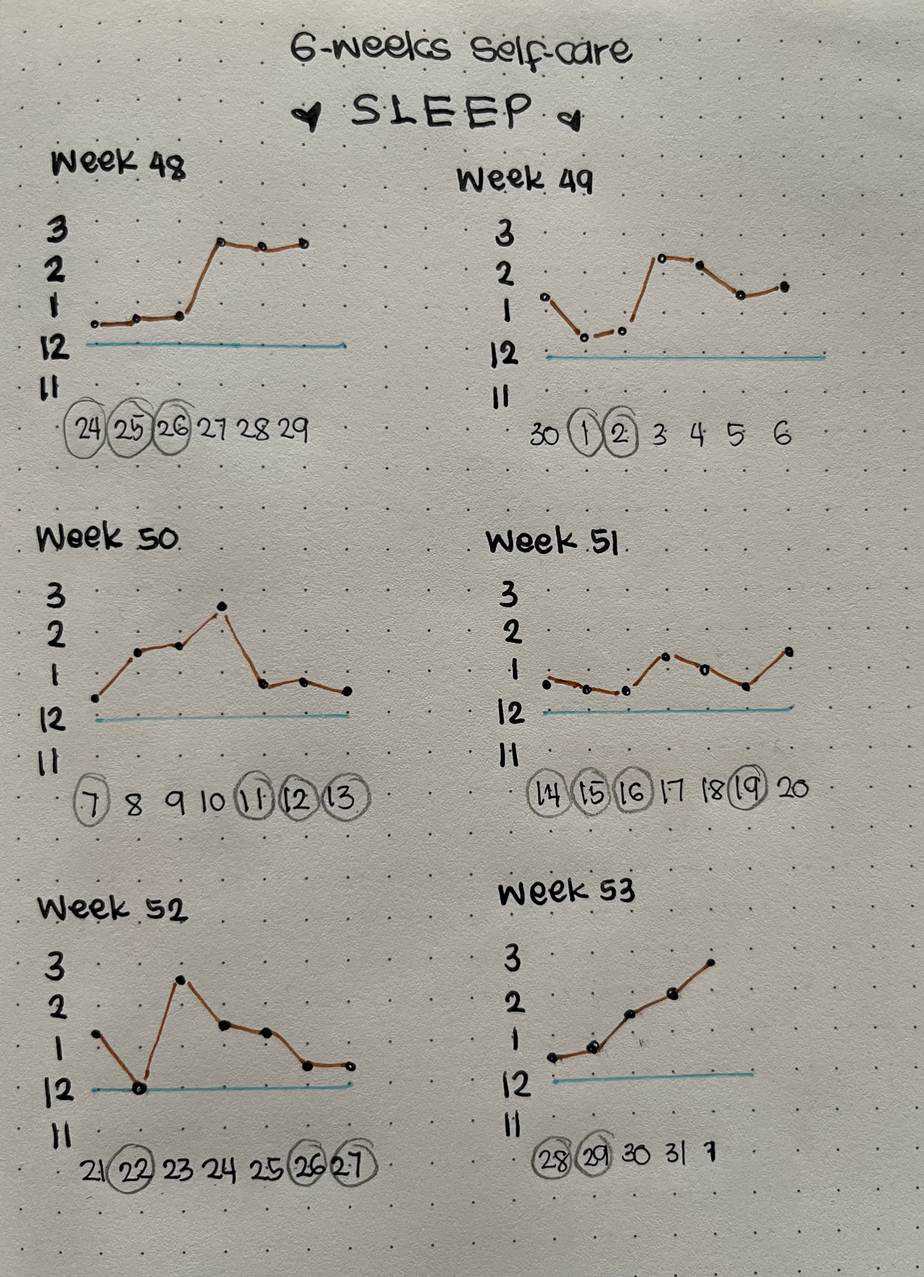
14. Pay attention to your habits
Our habits shape us. Because we do them without having to think about them, it’s easy to assume that we don’t have habits.
We all have habits (good and bad). And they determine the path we will have in life.
The quality of your life now is influenced by the kind of habits you have.
To live a life on purpose, it’s important to assess your current habits. See if these habits are still helpful. Do these habits support your goals?
It can be just as easy to form a good habit as it is to form a bad habit, but you need to take the time and energy to pick which ones you want in your life.
Some of the habits you may want to think about are:
- Healthy habits
- Financial habits
- Productivity habits
15. Practise gratitude
Be ambitious but be grateful.
There’s nothing wrong with being ambitious and striving for nice things. Most of us do. I do. I like nice things.
The thing is, when you become consumed with obtaining bigger and better things, so much that you lose sight of the precious things you already have, it kind of loses the point.
Remember that there will always be something better and bigger than what you already have.
Being ambitious and grateful at the same time is entirely possible. You just need a certain degree of intention and consistent practise of appreciating what’s in front of you.
Appreciate the simple moments of happiness.
Remember to notice the little moments of happiness in your day. Do not wait for the occasional, monumental, celebration, and milestones. Take time to find those special moments in your everyday life.
16. Live your life – every single day
Live everyday not just on weekends.
I’m sure, at some point, you might have heard someone said.
“It’s almost the weekend” or “I’m glad it’s nearly the weekend”.
There’s nothing wrong with these statements, because they imply excitement. And there’s absolutely nothing wrong with enjoying the weekends. (I love weekends).
The issue is when a person says these statements and uses the weekend as a shining beacon of hope to toil through the work week, it paints the weekdays as undesirable and expendable.
Wouldn’t it be nice if we treat weekdays as important and significant as weekends?
Life is too short to only let yourself enjoy a small fraction of your time.
There are things to be improved, enjoyed and discovered every single day.
Things like that morning cup of coffee, spending time with your loved ones, they are moments that you can enjoy on weekdays.
Think about relaxing on the couch with family after dinner with music and meaningful conversations. If you’re on your own, you can still relax on a couch with a good book, your favourite drink and maybe Netflix?
Living intentionally means fully absorbing every bit of the happiness life has to offer.
Every. Single. Day.
17. Embrace life with its ebbs and flows
So far you’ve got 17 tips to a purposeful living. I hope it makes you feel good, inspired and generally positive.
I also hope that by sharing these tips, I didn’t paint intentional living as a lifestyle that’s always positive and almost-perfect. Because it’s not.
If somehow these tips gave you an illusion that intentional living is a life that’s always happy and no stress at all. Let me burst that bubble now.
Life is life and it is what it is. So no matter what, it will have it’s ebb and flow.
Life happens.
Things and people may frustrate us.
Some goals are going to be so elusive.
Our habits will fail us. Things may go wrong. We may even make wrong choices.
But just remember. It’s ok.
Because you’re intentional, it means you can go through whatever you need to go through with grace and self-compassion.
And that is what Intentional living is all about.
Live in the now and act with intention.
Conclusion
Now that you have the 17 tips to purposeful living, you can enjoy life and live it to the fullest.
There’s just one thing you need to do.
Time to implement the tips. But be intentional.
Take what resonated with you the most and start implementing tips you want to implement.
Start with one or two and then build on that.
These are 17 actionable tips. If you like you can even try one tip a week. Then you’ll have about 4 months to experience living an intentional life.
You can do it and you deserve a meaningful and a fulfilled life.
Go ahead and get started now, because some amazing goals are waiting for you.


