
Money Mindfulness: 5 ways to Intentional Money Habits
Focus on the present moment.
Picture for a moment, what it would be like if you didn’t have to worry about money.
Imagine how you would feel if you were debt-free and living comfortably, enjoying financial freedom that lets you enjoy life a little more. All your financial decisions are aligned with your values, and your personal finances are well managed.
Visualise how much peace of mind you would have with fewer challenges related to money.
That would be an awesome feeling, right?
Dreaming about having fewer money problems isn’t just a fantasy. It can happen and you’re certainly capable, regardless of your financial circumstances right now.
All you need is to pay attention to money and start mindful money practices.
Just a quick disclaimer before you continue…
I’m not a financial coach or a financial service provider. What I will share in this article is a combination of knowledge I learned from personal life experiences, from people in my life, and books I’ve read. What worked for my family doesn’t guarantee that the same will work for you too. Consider reaching out to financial advisors if you need professional help with your financial situation.
DISCLOSURE: This post contains Affiliate links which means I earn commissions at no cost to you, if you use these links to make purchases. See Full Disclaimer here
What does it mean to be intentional with money?
Merriam-Webster defines “intentional” as “done with intention or design”, and “Mindfulness” as the quality of being “mindful”.
My take on being intentional with money:
Money Mindfulness is paying attention to your personal finances by being conscious of your money mindset, your money habits, and what you do with your money.. Which gives you the power to be in charge of your finances.
Money Mindfulness practices are:
- paying attention to your money mindset like doing money mindfulness meditation
- developing positive positive financial habits such as being intentional with your spending habits and saving habits
- being conscious of how you use your money
These money mindfulness techniques help you align your money mindset with your money habits that help you make money work for you, not against you.
Money works for you when:
- you have less money stress
- your money supports your lifestyle
- you make a positive impact on your life and on other people with the money you have
And money works against you when:
- you’re constantly stressed because of money-related issues
- you have debt and paying it off is a struggle
- you don’t have enough savings and you’re stuck when money emergencies happen
Benefits of being Intentional with Money
Achieving financial wellness is one of the main benefits of being intentional with money.
Being financially well means you have a balanced budget or healthy cash flow. Of course, this could look different for different people. But generally, it means, you have money for what you need now, and what you need later, such as an emergency fund for unexpected expenses.
Ideally, you’re debt -free and you have a financial strategy for for long-term goals like retirement.
Other benefits of money mindfulness are:
- Less money-related stress
- More financial freedom
- Control over your money, not the other way around

My Personal Experience as results of being intentional with money.
I’m sharing them to show you that you don’t have to earn heaps of money to have the quality of life you want. That being said, I encourage you to keep an abundance mindset and welcome the idea that your earning potential is limitless.
Through money mindfulness, we have been living debt-free since 2014 and we we’re able to experience both being SAHM (Stay-at-home mum) and SAHD (Stay at home Dad) while our kids were babies until they passed the toddler years.
By being mindful of money, we were able to afford a comfortable lifestyle even though I am only working less than 20 hours a week in my day job.
In the last 14 years (we came to Australia in 2010) my husband and I never had to work full time at the same time. It was always been one one full time and one on either stay at home or part time employment.
Money Mindfulness Goodness in my family:
- Money mindfulness helped my husband pay off a 5-figure credit card debt. Paid it in 3 years, on one income.
- By sharing Money Mindfulness with friends, we have close friends who got their finances sorted: they are now debt-free and have healthy savings accounts. No more money worries.
- We bought a car on finance (necessary when I was pregnant with our youngest child) We paid it off in less than 2 years instead of 7 years. again on one income.
- My husband and I have lived comfortably on one income several times in our 15 years of being married. We even squeezed in at least one overseas trip every year.
- R, my husband was able to be a stay-at-home dad for 2.5 years while I got back into the workforce. I stayed at home too for 3+ years.
- Took extended maternity leave when I had Miss M; our daughter (a total of 17 months)
And here’s the best part.
Since 2015, I haven’t worked full-time. I work 4 days a week less than 20 hours in total. I get to do my job which I love, and look after my family without spreading myself thin.
Working less enabled us to spend more time with our kids and make good memories. I appreciate that working part-time is not always possible for most people, so I feel grateful that I’m able to.
This kind of lifestyle is what we value and maybe, it’s different for you.
Just know, that having peace of mind about money can make a massive difference in your quality of life. So consider this thought when choosing the lifestyle you want to live.
And that financial peace of mind will only be possible if you’re in control of your finances.
Why should you be intentional with money?
The answer is up to you and your answer will be different from another person reading this post. And it will depend on your values or what’s important to your right now. Maybe you need to pay off debt or increase your savings.
Do bills and unexpected expenses stress you out? Have you got enough saved for when unexpected expenses happen?
Are you working harder than you should because it feels like there’s never enough to pay for what you need to pay for?
Ultimately, it would be based on what’s important to you and what you value most. It also depends on your relationship with money right now and what time of emotions you have when money topics come up.
For me, the short answer is peace of mind and a better quality of life.
Working 5 hours for 4 days every week is the life I’ve always wanted. I’ve been living it. And I’m ok with it, if I’m not earning as much as I could have, had I chosen to work more.
5 Steps to Money Mindfulness
If you want to be in charge of your finances to reduce or eliminate financial worries, you’ve got to try a mindful approach to money.
I’ll give you five practical steps that you can turn into positive money habits. Each step will help you gain control and inject intentionality into managing your finances.
If you’re a bit stressed with money for whatever reason, I encourage you to take a few deep breaths and believe that you can always turn things around. Because you can.
And you can start by practising the 5 Steps Money Mindfulness Practices I’m about to give you.
Step 1: Reflect on your Money Mindset
Understanding the topic of money through the lens of money mindfulness involves cultivating awareness and intentionality in your financial decisions, leading to a more positive relationship with money.
But what’s your money mindset?
This is important because this is your foundation in creating a money mindfulness practice.
To answer this question, let’s define first what a money mindset is.
Money mindset is the set of beliefs and attitudes you hold about money, and it significantly influences your financial decision-making.
Whether you have a scarcity mindset (fearing insufficient resources), or an abundance mindset, (believing in limitless opportunities), these perspectives shape your financial choices and behaviors.
Additionally, if you have a fixed mindset, you may perceive your financial future as predetermined and unchangeable. This limits your willingness to explore opportunities and stops you from being proactive in handling your financial circumstances.
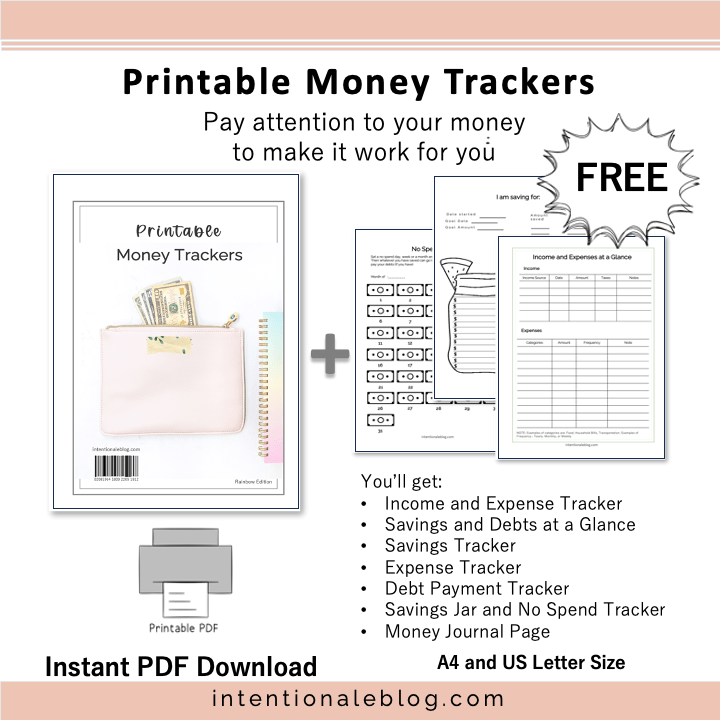
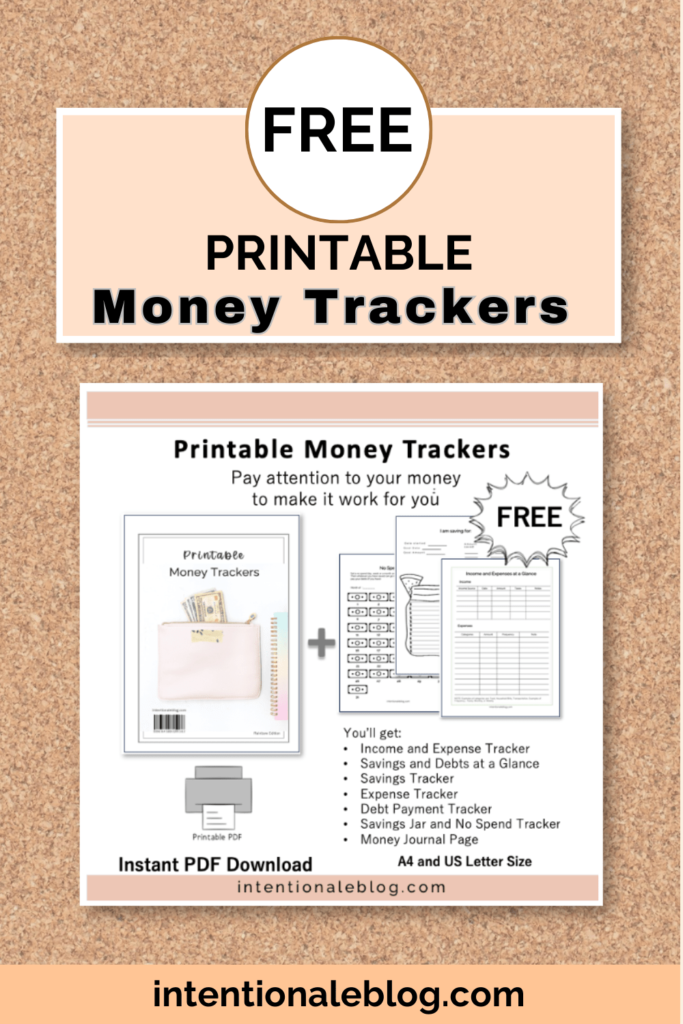
You must be aware of your money mindset. So I encourage you to take time to reflect on this. And while you’re at it, download these free money trackers so you know exactly where you are financially.
Identify your beliefs and thought patterns so you can nurture helpful thoughts and reframe the unhelpful ones.
Financial mistakes can’t be totally avoided but you can definitely prepare for it should it happen. In the same way, past mistakes related to money won’t be so bad as you thought when you keep a healthy mindset.
The Story Behind My Mindset
The purpose of this section is to be an inspiration for you, if you’re at the beginning stage of being intentional with money.
I’m sharing this hoping it will inspire you to focus on your mindset first.
Let this section gently remind you of two important thoughts, which I would like you to keep as you take your Money Mindfulness journey.
- You don’t have to have millions to feel rich and financially abundant
- Mindset matters just like how money matters: and having an attitude of gratitude will go a long way
True wealth and financial abundance aren’t solely measured in millions.
It’s about finding richness in life’s experiences, relationships, and personal growth, irrespective of the numbers in your bank account.
That said, it’s important to remember that when you have more money, you have more flexibility of financial resources that will support your meaningful goals. So don’t resist the idea that having more money in the bank is great.
Ok, back to my story.
Money has never stressed me out because I’ve always felt I have enough for my needs. Even though my income levels changed over time, I never had issues relating to money. And I believe it’s because I have a positive money mindset.
I view money as a tool and as a medium of exchange. Nothing more nothing less.
I was raised by a single parent who’s a hard worker, has a good work ethic, and is extremely wise with money. She is the biggest influence when it comes to money mindset and managing personal finance.
My Mother taught my siblings and me how important it is to be mindful of money.
We weren’t rich (in money), but we always had more than enough for important things (and a little more for fun.) My Mother never had a credit card and never kept big debt.
But we had to work hard and I started helping out in her small business when I was 8 years old. We had to make lots of sacrifices to make sure we lived below our means.
If I had to describe my childhood in one word: The word will be ” tough”.
I grew up working and helping my Mother support the family until I moved out of the home to be a working student. It was a rough childhood and it wasn’t easy especially when I had to move out at 12 years old to work for other people.
But Mother showed us, love, in many ways and that love outweighed the hardships and material stuff we missed.
She taught us gratitude, resilience, and most importantly, being wise with money. When I moved out of home to work and study, I also took time to learn how to manage personal money.
The 5 steps on how to be intentional with money are the result of continuous learning.
My life experiences helped me a lot and I am eternally grateful for my Mother and for the kind of life I had while I was young.
I learned two things growing up:
- Spend less than what you earn
- Save for the rainy days regardless of how much you earn and invest part of it.
Step 2: Set Clear Financial Goals
One of the mindful practices related to money is intentional financial planning.
Real quick interruption: I’m not a licensed financial professional so if you need proper financial planning or investment advice, please see a financial adviser or registered investment advisor.
Now, that it’s out of the way, let’s chat about setting financial goals.
Setting financial goals, such as savings goals, whether it’s short-term or long-term goals, when done intentionally can act as a roadmap. It points you in the right direction by helping you align your financial choices with your big dreams related to money.
To make your financial goals effective, consider being clear first with what truly matters to you. This is super important because financial goals often go beyond the dollar signs. So knowing what truly matters to you will help you set the right goals.
You don’t want to achieve your financial goals only to realise in the end that it’s all for nothing. Because you lost everything along the way.
Let me explain it a bit more.
If your goal is to have X amount of money, it’s more likely that it isn’t the real goal.
The real goal can be physical health, perhaps a healthier relationship, or maybe something else that has more intrinsic value that goes beyond money.
By having X amount of money, you can do a lot like :
- paying for convenience,
- freeing up “time” that you can use to spend quality time with your loved ones,
- or improve physical health by working just like other intentional human beings instead of working like a human-machine.
Knowing the “real goals” behind the dollar amount means that you’ll be more intentional with your strategy to achieve financial goals.
So, working 50 hours non-stop just to reach your X-amount savings goals quickly, is probably not a good idea, if the goal behind that savings goal, is to have better physical health, or a better relationship. It won’t make sense.
What’s the point in achieving your savings goals faster when in the end you’re burnt out and stressed?.
Step 3: Establish awareness
Knowing where you are financially at the current moment is vital for financial control. Because to know where you’re going you need to know first the starting point.
Awareness of where you are will help you make informed and better decisions financially. You’re less likely to make impulsive decisions because you have data to make good decisions.
So if you haven’t practised this one habit yet, I encourage you to do it now.
Track your money.
Tracking your money flow will help you find what needs your attention and where you need to make adjustments. For example, if your money tracker shows you that your expenses are higher than income then you know you got to do 2 things. You can either increase your income or decrease your spending.
By tracking every expense, you gain awareness of your money habits, a crucial first step in making informed financial decisions.
When you have a clear picture of your cash flow, you can craft a budget aligned with your values and goals – it’s a roadmap to financial success. I don’t like the term “budget” so in our household, we call it “Cash position”.
Tracking money seems daunting at the beginning but you can always fine-tune your strategy as you go.
Start simple. Use analog trackers if digital is a bit too much for now. But of course, if you love digital, go for gold and track keep it paperless. There are a lot of choices out there to track your money digitally.
The right tool or tracker is the one that will work for you.
Also, consistency is key; regularly revisit and adjust your budget to keep it dynamic and in line with your evolving priorities. Embrace this journey of financial self-discovery, and leverage technology to make the process smoother for a financially empowered future. Your wallet and future self will thank you.
Step 4: Practice Mindful Spending and Saving Habits
Mindful spending is more than just a budgeting technique.
It’s a mindset that encourages intentional choices with your money and focus on what you value.
While mindful spending helps you practice being intentional with your expenses, Saving habits support you in practicing intentional spending. Saving habits and Mindful Spending go hand in hand.
Obviously you need to set your financial goals first.
And to achieve your financial goals, you need to build good saving habits. While you’re building good saving habits, you can practice intentional spending so you’ll have more money to save.
Sounds simple right?
In theory yes, but when it’s time to implement, it’s not that easy.
Both require commitment and discipline.
But here’s what you can do:
- Think before you spend and consider what value an expense brings to your life
- Try practicing delayed gratification, where you pause first before making non-essential purchases
- Practice conscious consumption: focus on quality over quantity
- Prioritise needs over wants, but always make space for splurge and occasional indulging in luxuries
When it comes to saving habits, building an “emergency fund” is on top of the list. In my household, we call this “Peace of Mind Fund”.
By consistently setting aside a portion of income, you create a safety net for unexpected expenses, offering peace of mind in challenging times. Simultaneously, saving for long-term financial security involves setting realistic goals, whether for retirement, homeownership, or education. It’s about envisioning the future and taking strategic steps today.
Nowadays, instant gratification seems to be the norm for a lot of people. No judgment because people should be able to spend their money the way they want.
However, if you’re committed to being intentional with your money, cultivating mindful spending habits, and embracing techniques like delayed gratification, not only shape your financial well-being, but also lead to a more fulfilling and purposeful life.
Having a Peace of Mind Fund (emergency fund) adds layers of financial security, ensuring you’re prepared for both the expected and the unforeseen.
Step 5: Implement Strategies to Reduce Debts
Reducing debt is a pivotal aspect of being intentional with your money. It’s a big part of the Money Mindfulness aspect, because it frees up your financial resources and empowers you to make purposeful choices.
Carrying excessive debts can weigh heavily on your financial well-being. It limits your ability to allocate funds towards personal financial goals or emergency expenses.
If you have debt, please prioritize getting rid of them.
Here are two common strategies you can try. Of course, it depends on your situation and your personal preference.
- (1) Debt Snowball Method – where you focus on paying smaller debts first to build momentum
- (2) Debt Avalanche Method – where you prioritise the high-interest debts to minimise the interest payment
Numerous success stories underscore the transformative impact of debt reduction on individuals’ lives.
Imagine that ecstatic and fulfilling feeling once you paid the last dollar of your debt.
That moment will mark the start of you regaining control of your financial destiny. You’ll experience reduced stress related to money and of course, it will be the beginning of your financial freedom.
Your intentional efforts to curb debt can lead to tangible and positive outcomes.
You’re next steps
I’m going to leave you with a few tips so you can start practising money mindfulness immediately.
- Take time to reflect on what you value first? Do you value time more than material possessions, or experience over things? What you value is what you value so don’t ever feel someone will judge you of your choice. Whatever your choice is the best
- Follow the 5 Steps to Money Mindfulness Outlined in this Blog Post.
- Make a plan on how you’ll implement the steps.
- Keep a journal to record your progress
- Find an accountability partner or group where you share the same financial goals
- Just keep going until you achieve your financial goals. The right time to start is today.
And if you have spare moments read these other blog posts that will help you practice being intentional with money.
77 Financial Affirmations to practise Positive Money Mindset
6 Easy-to-follow steps to develop a Positive Money Mindset
3 Budget Categories List: Save more money live better


