
Intentional Spending: 7 tips on how to manage budget
Do you know the worst and the most uncomfortable feeling when you’re living paycheck to paycheck?
It’s feeling defeated and hopeless due to financial insecurity and vulnerability.
That anxious feeling while you watch your money slipping through your fingers faster than you can earn it. It can feel like you’re always on the edge, one unexpected expense away from a financial disaster.
If this resonates with you even in the slightest, I hope you know that there’s hope. And you’re very much capable of doing something about it.
You’ve already done one forward step by reading this blog post and that’s something.
So stay with me and I’ll help you practice intentional spending to manage your budget.
It’s one of the practical steps you can take to turn things around.
Just a quick disclaimer before you continue…
I’m not a financial coach or a financial service provider. What I will share in this article is a combination of knowledge I learned from personal life experiences, from people in my life, and books I’ve read. What worked for my family doesn’t guarantee that the same will work for you too. Consider reaching out to financial advisors if you need professional help with your financial situation.
DISCLOSURE: This post contains Affiliate links which means I earn commissions at no cost to you, if you use these links to make purchases. See Full Disclaimer here
What is intentional spending?
Intentional spending is a thoughtful consideration of each purchase to make sure it brings value and aligns with your financial goals.
It’s an essential habit in practising money consciousness.
This is an intentional way of aligning your spending habits with your values, priorities, and long-term financial goals.
Through intentional spending, you get to:
- be in control of your finances
- build intentional savings, and
- practise mindful spending or mindful consumption
Mindful consumption not only benefits your personal finances but also the economy and environment.
For example, if you’re mindful of your purchases, you’re more likely to support small businesses that promotes minimising environment impact.
They often offer products or services that prioritise quality over quantity and contribute to a more sustainable lifestyle.
Here are some of the benefits of practicing intentional spending:
- better and healthier bank account balance by avoiding impulse buys
- more achieved savings goals by having a more conscious spending plan
- enough money for both wants and needs as a result of wiser financial choices
- financial independence through intentional living and money mindfulness

How to spend your money intentionally
To spend your money intentionally, you need to keep a positive money mindset and practice positive money habits.
Keeping a positive money mindset starts with being aware of your personal beliefs. Then reframing them if they’re not helpful. You can use financial affirmations to help you reframe negative money thoughts to positive money thoughts.
The next step is setting financial goals and creating a conscious spending plan. But if this is your first time doing it, you might need to back up a bit and start by examining your personal values.
Your important values will be your guide in making more intentional financial decisions. Once you have this sorted and you have your realistic budget, then all you have to do is manage that budget.
7 tips on how to manage your budget
I’ve got 7 tips for you to manage your budget very well. But before you go through the tips, it’s a good idea to understand first the foundation of personal finance.
What’s a budget?
A budget is a spending plan for your money.
It helps you manage the money your earn and to plan how much you’ll spend on things like rent, food, bills, and saving for the future. Sticking with your budget makes sure that you’re spending money wisely.
Note: I don’t really like the term budget so I often refer to it as spending plan or cash position.
The foundation
You can have the best budget but if it’s poorly managed then it’s not really going to be that helpful.
Begin with establishing awareness of your current financial situation. Check your personal accounts and review your credit card statements (if you have credit card debts).
How much do you have in your short-term savings? Do you have enough money for what you need today as well as for tomorrow?
A lot of people get stressed when unexpected expenses pop up and they don’t have an emergency fund to rely on.
1. Pay attention to your personal finances
Make time
Set a date to pay attention to your personal finances. It can be daily, weekly, monthly, or quarterly.
Have a money date: either on your own or with a partner or family members. And you don’t have to do it every month, you can do it weekly or quarterly if you prefer.
Set financial goals.
Define short-term and long-term financial goals to stay motivated and focused on intentional spending.
Create a spending plan or a cash position that aligns with your personal values. Then identify your priorities: Determine what truly matters to you and allocate your money accordingly.
Track your money
Track your expenses. Make a record of your expenses to gain awareness. So that next time you can make more conscious decisions about the use of your money.
Plan for irregular expenses and set aside money in advance so you can avoid overspending.
Review regularly
Reflect on your progress:
Take time to reflect on your intentional spending journey, celebrate your successes, and learn from any setbacks along the way.
If you haven’t done so, I suggest building a habit of doing a weekly review. Here’s how you can make things happen using GTD Weekly Review.

2. Needs first, wants next
Be clear about what really matters. And differentiate between needs and wants.
Before making a purchase, ask yourself:
Is it a need or simply a desire? If you had to choose, prioritise experience and nurturing relationships over material possessions.
Invest in experiences that create lasting memories rather than fleeting material possessions just for the sake of “having”.
Please don’t interpret this with being against buying stuff. It’s lovely to have fine things, there’s nothing wrong with that. You just need to be intentional about it.
Avoid emotional spending.
Don’t let emotions dictate your purchasing decision. Instead, make rational choices based on your needs and values.
3. Be intentional with your purchases
Practice mindful shopping.
Be present and intentional when you’re in a grocery store to avoid impulse purchases.
If you don’t have much money to spend on your groceries, it’s worth it to check out clearance racks. Small savings here and there even for small items help. Every little bit of savings counts.
Set spending limits.
Establish boundaries for different expense categories to avoid overspending.
You can use credit cards for everything but make sure to pay them in full every month to avoid paying interest.
It’s a good idea to keep a central list of what you spend so you can regularly review what you still need and what you can let go.
If you’re a Blogger, you can create a comprehensive list of the tools and resources that you use just like the List of Blogging Tools and Resources for the Intentional Blogger. Then review regularly and assess which ones need to go.

4. Implement savings strategies
Automate savings.
Set up automatic transfers from your checking account to savings accounts or investment funds to prioritise saving.
Research before buying.
Compare prices, read reviews, and explore alternatives to find the better value for your money.
Practise delayed gratification
One of the best ways of saving money is by practising delayed gratification. Give yourself some time to consider what you want to buy, especially the big-ticket items.
Making a “want list” and then have a saving plan, especially for big-ticket expenses to pay for those items later on.
My Mother loves saying this line:
“If you can’t pay it in cash, then you can’t afford it for now. So start saving”
Review all your subscriptions regularly and reassess which ones are worth keeping. Let go of the rest, you can always resubscribe if you really need them later.
Be Organised
Plan for irregular expenses: Anticipate expenses like birthdays or holidays and set aside money in advance to avoid overspending.
Regularly review your recurring expenses like insurance policies or utility bills to ensure you’re getting the best value for your money.
Embrace minimalism.
Simplify your life by decluttering and focusing on what truly brings you joy and fulfillment. This is How you can make Decluttering your Home a Holistic Process.
5. Be a smart shopper
Buy in bulk.
Purchase non-perishable items in bulk to save money in the long run.
Use cash or debit cards.
Paying with physical money or using debit cards helps you stay within your budget and avoid accumulating credit card debts. That being said, it’s ok to use credit cards as long as you’re intentional about it
I use my credit card to pay for almost everything. Then when the statement is ready I pay the balance in full. I don’t even wait for the due date. This way, I never paid interest. Then I get points for the purchases I made. And the points can be converted into dollars.
Doing it this way really maximise the use of credit card. It’s convenient and I don’t pay extra fees. I only pay for annual fee but it’s covered by the points I’m getting and there’s always left over dollars. In short I get extra money just by using my credit card wisely.
Borrow or rent instead of buying.
Consider borrowing or renting items that you only need temporarily to save money and reduce clutter.
Avoid shopping triggers.
Identify situations or environments that make you prone to impulse buying and find ways to avoid them. Find healthier ways to cope with stress or emotions instead of resorting to retail therapy.
An item that is being sold for 80%off isn’t a good deal if you don’t genuinely need that item.
Negotiate prices.
Don’t be afraid to ask for discounts or negotiate prices, especially for larger purchases.
Embrace second-hand shopping.
Thrift stores, consignment shops, and online marketplaces can offer great deals on gently used items. Take advantage of those. If you go to second hand shops, you won’t believe how many items are still with tags.
6. Lean on your creativity and resourcefulness
Meal Plan
Plan meals in advance. Meal planning helps reduce food waste and saves money on unnecessary grocery purchases.
Embrace DIY
If you have skills and capacity, explore do-it-yourself alternatives for tasks or projects instead of outsourcing them.
Seek out free or low-cost activities.
Discover local events, community programs, and recreational activities that don’t require a significant financial investment. Take a mindful walk. Watch movie at home. Play board games. There’s a lot you can do the don’t require money.
Collaborate
Share resources with others. Collaborate with friends, family, or neighbours to share resources like tools, equipment, or even transportation.
7. Keep a grateful heart and be content with less
Practice gratitude.
Appreciate what you already have instead of constantly seeking more. Keep a gratitude journal.
Practice contentment.
Cultivate a mindset of contentment by appreciating what you have rather than constantly seeking more.
What’s the next step for you?
The next step for you is to make a list of all the ideas from what I’ve given you. Pick a few that you want to implement.
Then challenge yourself to implement one idea. More is better but do it one at a time.
Then take note of how much money you save (or earn) by implementing those ideas.
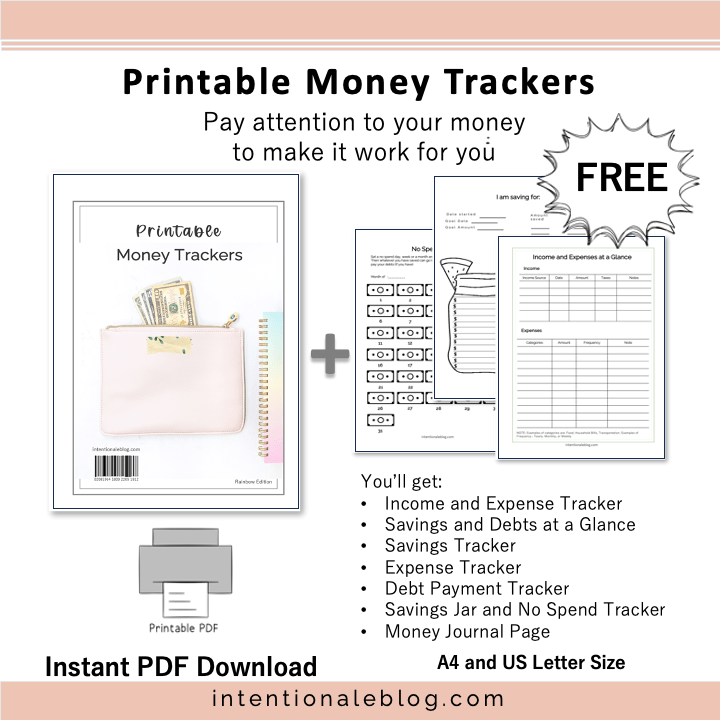
You can even turn this note into a gratitude log or journal. Remember to get your free money trackers below. Click the image and you’re set.


