
Bullet Journal Weekly Spread: (mindset behind an intentional week)
How do you make things happen using the Bullet Journal Weekly spread?
Read on if you want to discover how the 2 pages of a notebook can help you achieve your goals by being intentional in planning your week.
Going back to that question, I say you gotta know first what you want to happen, then make a plan and take action.
Sounds easy, right?
But hear me out for a sec.
Let’s pretend you know exactly what you want, a.k.a your goal.
Now, if you’re anything like me, you probably feel that planning is one of the most exciting things to do.
When you think about planning, a few things come to mind. Colourful post-it notes, nice pens, beautiful notebooks, and calendars. (and maybe coffee or tea too).
Planning is exciting and it brings out the creativity in people.
The thing is, you can have the best goals and the most detailed plan but if you don’t take action nothing will happen.
It’s really simple. No action. No result. Right?
So if you’re ready to take action and actually achieve your goals then read on.
There’s a lot of elements involved in achieving a goal and taking a weekly action is one of them.
Hey, if you don’t have a bullet journal it’s ok. You can download a free weekly planner here. Even though this is all about the Bullet Journal Weekly spread, the ideas presented here can still work if even if you’re using a different type of organiser like a printable below. You can get this for free right here.
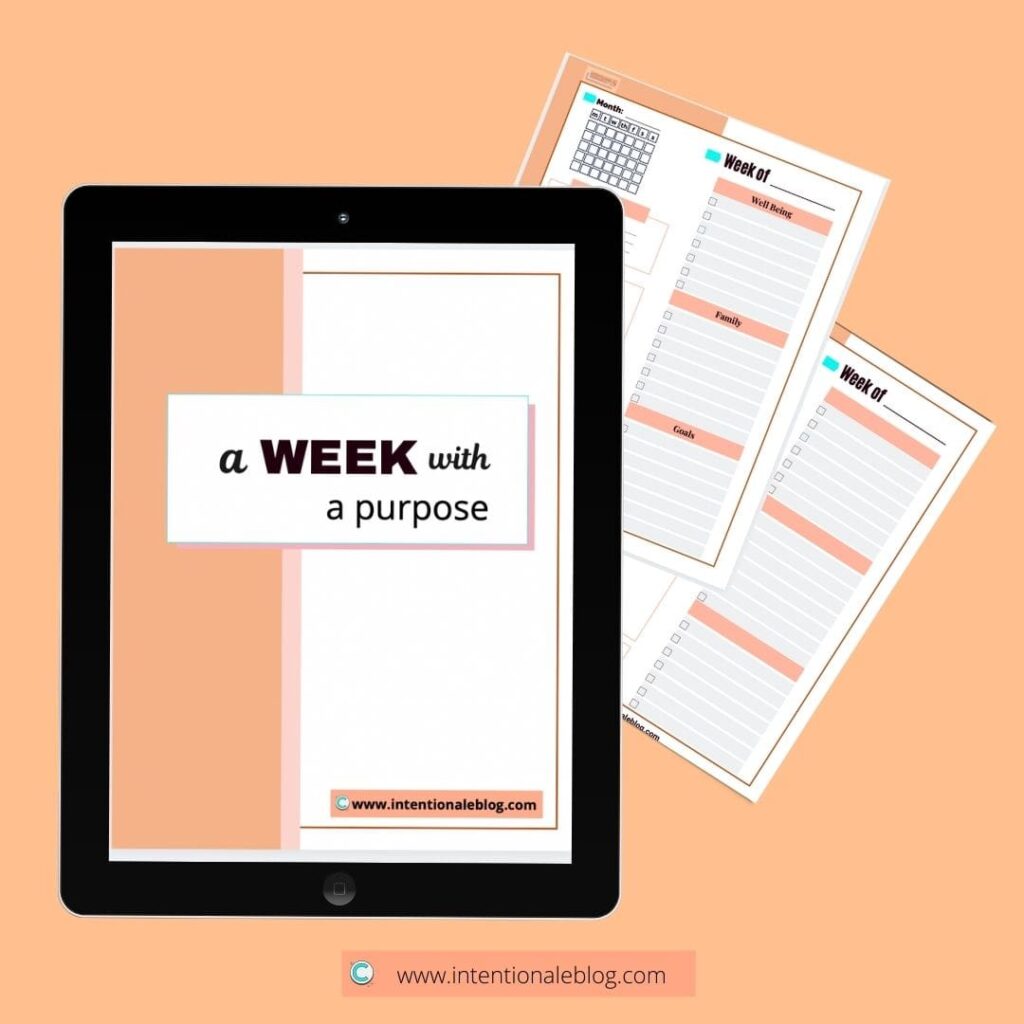
What’s a Bullet Journal Weekly Spread?

For personal productivity, I have been using Getting things Done and the Bullet Journal Method for more than 5 years now. I’m sure there’s a lot of productivity methods out there that are useful too, but the combination of these two have been the most useful for me.
A Weekly Spread is also a form of collection in the Bullet Journal Method. If used well, it can make a big difference in achieving your goals.
It’s basically an overview of your week. You can think of it as your weekly planner. It’s a two-page layout where you write, plan, take notes, manage all that matters to you for that week. Think of events, things to do, meal plans, habits, and important notes are at a glance.
If you search Weekly Spread there’s a lot of ideas and different approaches on how to create this page.
I have been using this for a while and it helped me a lot in organising my personal and family life.
It helped me (and my family) achieve a lot of goals in the last 5 to 10 years. I mentioned these completed goals in my January 2021 Monthly review . The Goals we have achieved as a Family from 2010 to 2020 are also mentioned in the Vision Board post for 2021.
In one way or another being organised using the Bullet Journal as a tool helped us achieve many goals.
Benefits of weekly planning using a weekly spread?
Having detailed specific plans is one thing but turning those plans into action is another. I’m talking about those medium to long term goals like monthly and yearly plans.
Even if you have the most amazing plan, if you’re unable to actually do the “Action” part of it, the plan will just be a plan and your goals will just remain ideas.
While monthly, quarterly and yearly goals take care of the big goals, weekly plans take care of the small moving parts that will help you achieve those big goals. And that is where the magic happens. Progress, consistency and growth.
How does weekly spread help you achieve your goals?
There are 5 benefits of weekly planning using weekly spread
1. It serves as a tracker that helps you stay consistent
A tracker works wonders in so many ways. It helps monitor your progress, stay on track by being consistent and it helps you develop helpful habits and break unhelpful habits)
2. It helps you get a grip on each and everything that’s important to you.
What’s important can be different for everyone but people always have something that’s important to them. It can be family, work, passion, goals, and health. These are just a few examples.
So if you value family, well-being or passion, then make sure you include this in your weekly plan.
3. You can use it to know what works and what isn’t
If you’re a planner then perhaps you can relate to this. When you plan for the week, you have the best intentions and you plan what you think will work.
The reality is, there’s no guarantee that everything will work. So having a record of what worked and what didn’t in the weekly spread can help you plan better for the next week. This means you need to change something. And change means growth.
4. It helps you get the right things done
A to-do list that’s intentional helps you become more focused.
Have you ever found yourself tired after doing a lot of things but got nothing to show for it?
I have and so many times too. What I’ve learned is, when this happens, it’s because I’m focused on small things that have less value instead of the things that have a higher value.
Let me explain a little bit more.
If my goal is to publish 5 posts this month, then a high-value task will be writing a blog post. However, I love organising my files in Notion, creating graphics and playing around with templates. I could do this all day every day.
Both of these tasks are important for my blog, but if I’m going to look at my goal which is to publish 5 posts then, I should be doing more writing instead of organising. Organising can be done later when I finish writing.
5. It makes it easier to complete a project
I find it helpful when I set quarterly goals. Break them down into monthly goals and then break them down into projects.
The projects are then further broken down into smaller and more specific tasks that are spread out each week. This way, I can be sure that every week, I get something done.
The mindset behind an intentional week
If you’ve been hanging out with me, you might have noticed that mindset is a big thing for me. So, let me share the mindset behind an intentional week.
If everything is important then nothing is
I used to think that everything is important. Big mistake. But I didn’t know any better before becoming intentional.
Now that I’m an intentional person, I’m finally at peace with the fact that not everything in my life is important. I also believe what truly matters are the only essentials in my life. The rest are just extras.
So when it comes to my setting up a weekly spread, I made a decision to only include what’s important.
I do what I say I would do
Not always but I always try to.
Life can be crazy sometimes. If you’re a mum like me with young children, and you work, plus you have a blog gig on the side, there’s always so much to do in the shortest time you have.
So the “I do what I say I would do” thing only applies to the most important tasks.
In this regard, prioritising is a very important skill to develop.
One thing that helps me prioritise is to think this way:
Not everything is important and urgent. So at any given time, I only pick what’s important and the rest can wait (most of the time, they can go).
If things don’t work out this week, next week is not too far ahead to start over
A bullet journal weekly spread is a powerful tool if you want to be consistent with the implementation of what you’ve planned for the week.
What I love about the 7-day period of planning and taking action is, it’s easy to measure or track the progress that I make.
There are good weeks and there are weeks that are “blah”.
The good thing is if you’re having an ‘off week’ now, the next week is not too far ahead to start over or reset.
It’s perfectly fine to have an “off week” and to have a break as long as you don’t stay that way for several weeks.
If you do, you’ll end up losing motivation or you’ll feel that you failed because there’s no progress. So just watch out for that.
How to create a Bullet Journal Weekly Spread?
If you reach this part and you don’t have a bullet journal, there are two things I suggest.
- Read the Beginner’s guide on how to create a Bullet Journal if you want to start making one.
- If you’re not interested in the Bullet Journal method, it’s totally fine, you can still use this guide or the idea to create an intentional week using your choice of planner. It can be digital or analog. Whatever works best for you.
Guide questions on how to create a weekly spread
To help you decide what you need to include in your bullet journal weekly spread, try answering the following questions. It will also help you in planning the layout of the page.
- Think of how you would like your week to look
- What are the usual responsibilities or tasks you have at a given week?
- Is there anything you like to keep track of?
- Do you have a habit that you want to keep?
- What is it that you would like to achieve in that particular week?
What to include in a weekly spread?
There’s no rule when it comes to what you can include in your weekly spread.
The key point is you use it the way you want it to be. A planner, a tracker, and a journal it’s up to you.
My weekly spread has evolved over the years. It used to treat it as my second brain so you can imagine how much information would have been in there.
My intention in using a bullet journal is to use it as a productivity/mindfulness tool. At the same time, I’m using it as a recording tool so that it can be a part of my story that I want to share with our kids.
Keeping that intention in mind, I always try my best to keep the content in my Bullet Journal “filtered”. What I mean by that is, I carefully choose what I write in it, and every space is precious real estate. No more random to-do lists, or random doodles. I still doodle but I keep it intentional.
Now, you may think that doing this can be restrictive and limiting.
The solution is a hybrid organising system. I will write another post about this. But for now, let me give you a quick explanation about this.
All my ideas and the note-taking process is done digitally. I have an app called Notion where I capture, process and organise ideas. It’s also where I organised my whole life digitally.
So in essence, all the unfiltered thoughts, ideas, and everything uncategorised go in Notion. The organised thoughts and ideas that will still matter even if I’m 90 years old go to my Bullet Journal.
What’s in my weekly spread
Calendar

For me, I like my week to balance my personal, family and goals. I am the household manager so my weekly spread has a calendar to make sure I can track the events and appointments of my family.
Food for the week
Not knowing what food we’re going to eat for the whole week stresses me out so I make sure that my bullet journal weekly spread has a space for a food list for the week. We have 3 go-to breakfasts and snacks are almost the same so I only make a list for main meals ( lunch and dinner)
Active (current) projects
Every week, I have 3 active projects and this includes my weekly spread. This way I always know what I need to be working on every single week.
Getting things done section:
I have 3 categories under this section:
- well-being
- family and home
- Passion
Well -being
This is where I write the habit I keep for the week relating to well being. My work has a weekly challenge that promotes living better and healthier. So I use this to write/track the well-being challenges
Family and home:
It’s straightforward. This section is for family and home. So this is where I take note if there’s a bill to pay, what cleaning tasks need to be done and when I need to review our finances.
Passion:
All the tasks I need to complete for the blog are listed here. Things I need to do, learn and execute are written here. I try to only write a few to avoid being overwhelmed and to stay focused.
This part takes a bit more space because I’m still in the building stage of the business.
The ultimate goal is to learn as much as I can and then eventually lessen the time I need to spend in this category.
Conclusion
I hope that the Bullet Journal Weekly Spread inspired you to be intentional with your weekly planning no matter what organising tool you’re using.
It’s also a good thing to take note of the mindset behind intentional weekly planning.
If you enjoyed this post, please share your thought. I’m always interested to learn new things. How do you plan your week? Would you mind sharing your tips?


